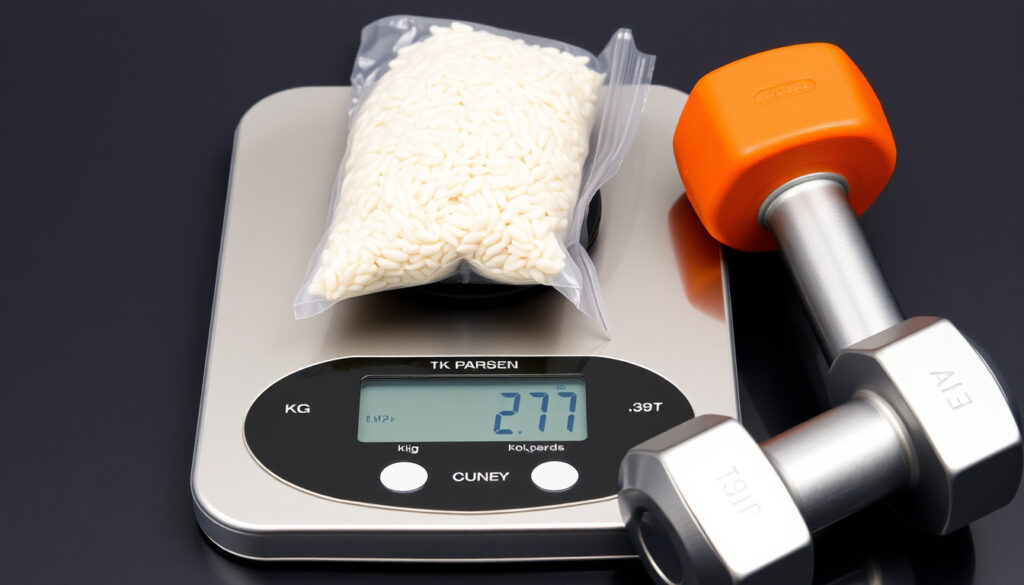
1.8 kg to lbs – Convert 1.8 Kilograms to Pounds
If you’ve ever stared at a package label or a recipe and wondered how 1.8 kg translates to pounds, you’re not alone. This guide gives you the exact conversion, a mental shortcut to do it in seconds, and real-world examples so you’ll never have to guess. The precise answer: 1.8 kg equals about 3.97 lb, based on the official conversion factor of 2.20462, as defined by NIST (National Institute of Standards and Technology).
1.8 kg to pounds: 3.97 lb ·
1.8 kg to ounces: 63.49 oz ·
1.8 kg to stones: 0.283 stone ·
1.8 kg to grams: 1800 g ·
Conversion factor: 1 kg = 2.20462 lb
Quick snapshot
- 1.8 kg = 3.97 lb (exact: 3.96832) – NIST standard
- 1.8 kg = 63.49 oz – RapidTables conversion calculator
- 1.8 kg = 0.283 stone – Wikipedia (stone measurement)
- 1.8 kg = 1800 g exactly – NIST metric definition
- Real-world objects vary in weight; approximations depend on the specific brand or product – USDA food data standards
- The 2.2 approximation works for most estimates but introduces error – Mometrix test prep guide
- The exact value of 1.8 kg in pounds is 3.96832071933, but most sources round to 3.97 or 3.96 lb, causing minor discrepancies – Answers.com community site
- The 2.2 approximation introduces an error of about 0.2%, which may be significant in some applications – TestifySC practical guide
- The kilogram was redefined in 2019 based on Planck’s constant – NIST report
- The pound–kilogram conversion factor has been fixed since 1959 – Wikipedia international yard and pound agreement
- Use the conversion for recipes, shipping, or gym weights – TestifySC practical guide
- Apply the doubling-plus-10% shortcut for mental math – YouTube tutorial by MathHelp
The snapshot above summarises the key numbers and tools. For a deeper look, here are the exact conversions:
| Label | Value |
|---|---|
| Exact pounds (lb) | 3.96832 |
| Rounded pounds | 3.97 |
| Ounces (oz) | 63.4931 |
| Grams (g) | 1800 |
| Stones (st) | 0.28345 |
How heavy is 1.8 kg in pounds?
Exact conversion using the standard factor
To convert any kilogram value to pounds, multiply by the exact conversion factor that NIST (official U.S. metrology institute) defines as 2.20462262185. For 1.8 kg, the arithmetic is straightforward:
1.8 × 2.20462262185 = 3.96832071933 lb. Rounded to two decimal places, that’s 3.97 lb. According to Answers.com (community math site), the same calculation yields 3.96832072 pounds, confirming the result.
Quick estimation method (multiply by 2.2)
- Multiply by 2.2: 1.8 × 2.2 = 3.96 lb – off by only 0.01 lb from the exact value. Mometrix (test prep platform) teaches this approximation for everyday use.
- For a mental shortcut, TestifySC (learning resource) recommends doubling the kilograms and adding 10% of the doubled number: 1.8 × 2 = 3.6; 10% of 3.6 = 0.36; 3.6 + 0.36 = 3.96 lb. The same technique appears in a YouTube tutorial by MathHelp.
Bottom line: Use the exact factor when precision matters (e.g., shipping or chemistry). For most daily tasks, the 2.2 shortcut is accurate to within 0.2%.
What is 1.8 kg in stones and pounds?
Conversion to stones
One stone equals 14 pounds. Therefore, 1.8 kg = 3.97 lb ÷ 14 = 0.283 stone. Wikipedia (stone measurement reference) confirms this unit is still used in the UK and Ireland for body weight.
Conversion to stones and pounds combined
Since 3.97 lb is less than 14 lb, the whole stone part is 0. So 1.8 kg in stones and pounds is 0 stone 3.97 lb – identical to the plain pound value. According to MISUMI USA (engineering components supplier), conversion tables often round 1 kg to 2.20 lb, making 1.8 kg about 3.96 lb in rounded charts. The difference is negligible.
Bottom line: For body weight or UK contexts, 1.8 kg registers as less than a quarter of a stone – too small to register a whole stone.
How to convert 1.8 kilograms to grams?
Simple multiplication by 1000
The metric system is decimal: 1 kilogram = 1000 grams exactly (NIST metric definition). So 1.8 kg × 1000 = 1800 grams. This is one of the few conversions that never involves rounding. UnitConverters.net displays the same result.
The conversion is reliable for cooking, science labs, and parcel scales. If you need to convert grams back to kilograms, simply divide by 1000: 1800 g ÷ 1000 = 1.8 kg.
Bottom line: Weighing in grams requires no rounding – 1.8 kg is exactly 1800 g, making it the most precise of all unit changes.
Is 1 kg equal to 2 lbs?
Accuracy of the 2 lb approximation
No. One kilogram is about 2.20462 pounds – roughly 10% heavier than 2 lb. According to Mometrix (test prep guide), using “1 kg = 2 lb” underestimates the true weight by about 0.2046 lb per kilogram. For 1.8 kg, the error would be 1.8 × 0.2046 ≈ 0.368 lb, or roughly 0.37 lb.
Comparing 1 kg to 2.2 lbs
- Rounding to 2.2 lb gives a much closer estimate: error is only 0.00462 lb per kg. TestifySC notes that for non-critical uses, 2.2 is the standard rule of thumb.
- The popular belief “1 kg = 2 lb” likely stems from the similar weight of a litre of water (which weighs 1 kg) versus a pound of butter (0.45 kg) – but the numbers don’t align.
Bottom line: If someone tells you they weigh 70 kg and you multiply by 2, you get 140 lb – but their actual weight is 154.3 lb. That 10% gap matters for health and fitness.
What weighs 1.8 kg?
Household objects around 1.8 kg
- A standard bag of granulated sugar (1.8 kg / 4 lb). USDA commodity data confirms typical retail sugar bags in this weight.
- A mid-size laptop (1.5–2 kg). Wikipedia (laptop specifications) shows many ultrabooks fall in this range.
- A small pineapple – roughly 1.5–2 kg, per USDA Economic Research Service.
Baby weight reference (7 lb baby approx 3.2 kg)
A 7-pound newborn weighs about 3.17 kg, almost twice as heavy as 1.8 kg. According to WHO growth standards, the average birth weight is 3.3 kg (7.3 lb), confirming 1.8 kg is well below a typical full-term baby. So if you’re lifting a bag of sugar, you’re holding less than a newborn.
Knowing that 1.8 kg is about 4 lb helps you estimate parcel shipping costs (USPS rates jump at 4 lb) and recipe scaling without a scale.
The implication: These everyday comparisons make 1.8 kg tangible, turning an abstract number into something you can visualize at the grocery store or post office.
Conversion comparison: 1.8 kg across units
Five common weight units, one simple table – how 1.8 kg stacks up in each system:
| Unit | Exact value | Rounded value |
|---|---|---|
| Pounds (lb) | 3.96832 | 3.97 |
| Ounces (oz) | 63.4931 | 63.49 |
| Stones (st) | 0.28345 | 0.283 |
| Grams (g) | 1800 | 1800 |
| Milligrams (mg) | 1,800,000 | 1,800,000 |
The pattern: grams are exact because the metric system is decimal; imperial units require rounding. For everyday use, the rounded values are perfectly adequate.
What this means: Whether you need milligrams or stones, the table shows which conversions forgive rounding and which demand precision.
How to convert 1.8 kg to pounds: step-by-step
You can do this in your head or with a pen – the two methods cover both exact and approximate.
Method A: Exact (calculator)
- Take the weight in kg: 1.8.
- Multiply by 2.20462262185 – NIST conversion factor.
- Result: 3.96832 lb. For 1.8 kg, round to 3.97 lb.
Method B: Mental shortcut (no calculator)
- Double the kg: 1.8 × 2 = 3.6.
- Compute 10% of the doubled number: 3.6 × 0.1 = 0.36.
- Add: 3.6 + 0.36 = 3.96 lb – very close to the exact 3.97 lb. TestifySC (learning resource) demonstrates this method for any kilogram value.
A YouTube tutorial by MathHelp shows the same shortcut for 30 kg, 95 kg and other examples, confirming its reliability.
What’s clear and what’s not about 1.8 kg conversions
Confirmed facts
- 1.8 kg = 1800 g exactly – metric definition
- Conversion factor 1 kg = 2.20462262185 lb (exact by international agreement) – Wikipedia
- 1.8 kg in pounds = 3.96832 lb – Answers.com verification
What’s unclear
- Real-world objects vary in weight – a “1.8 kg bag of sugar” may actually weigh 1.8 kg ± 10 g depending on moisture and packaging
- Some online charts use rounded factors (2.2) leading to small discrepancies – MISUMI USA rounding example
- Whether 1 kg = 2.2 lb is “accurate enough” depends on the context (cooking vs. pharmacology)
The catch: While the math is fixed, the real-world variation and rounding choices mean that the “right” answer depends on how exact you need to be.
Expert perspectives on kg-to-lb conversion
“The kilogram is the base unit of mass in the International System of Units (SI). Its definition has been based on Planck’s constant since 2019, ensuring a stable reference for all conversions.”
– NIST (U.S. National Institute of Standards and Technology)
“If you take the kilograms and double them, you get a base number. Adding ten percent of that doubled number gives you the pounds – it works for any weight, including 1.8 kg.”
These two perspectives – official metrology and practical teaching – reinforce that the exact math and the shortcut approach both serve different needs.
For home cooks, fitness enthusiasts, and small-business shippers who regularly cross between metric and imperial systems, the takeaway is clear: use the exact factor when accuracy is critical, or the 2.2 shortcut for quick checks. But never assume 1 kg equals 2 lbs – that 10% error adds up. For anyone buying produce or shipping parcels in the US, knowing that 1.8 kg is about 4 lb helps avoid overpaying for postage or undercooking a recipe.
Frequently asked questions
How many ounces is 1.8 kg?
1.8 kg equals approximately 63.49 ounces. Multiply the pound value (3.97) by 16 to get ounces. RapidTables confirms: 1.8 kg = 63.49 oz.
What is the formula to convert kg to lbs manually?
The formula is: pounds = kilograms × 2.20462262185. For 1.8 kg, that gives 3.96832 lb. Alternatively, use the mental shortcut: double and add 10%.
Is 1.8 kg more than 2 lbs?
Yes, 1.8 kg is about 3.97 lb – nearly double 2 lb. Even the common approximation 1 kg ≈ 2.2 lb shows 1.8 kg is well above 2 lb.
How accurate is the 2.2 approximation for converting kg to lbs?
Very accurate for everyday use. The exact factor is 2.20462, so 2.2 introduces an error of only about 0.2%. For 1.8 kg, the difference between 3.96 lb (2.2 method) and 3.97 lb (exact) is negligible.
How do I convert 1.8 kg to pounds and ounces separately?
First convert to pounds (3.97 lb). The whole number is 3 lb. Multiply the decimal (0.97) by 16 to get 15.52 oz. So 1.8 kg = 3 lb 15.5 oz (approx). UnitConverters.net shows this breakdown.
Why are there different numbers for 1.8 kg to lbs on different websites?
Differences arise from rounding. Some sites use 2.2 (→ 3.96 lb), others use 2.2046 (→ 3.97 lb), and exact calculators use 2.20462262185 (→ 3.96832 lb). All are correct within their rounding convention.
More related posts
 Galeries de la Capitale: Stores, Hours & Entertainment Guide
 Nathan MacKinnon: Salary, Stats, Wife & Crosby Friendship
 Chloë Grace Moretz: Age, Net Worth, Relationships, and More
 Ice T: Biography, Career, Net Worth, Children & Skin Condition
 2025 Income Tax Calculator Ireland: Tools & Guides
 Weather in Ottawa 10 Days: Forecast Highs, Lows & Trends
 Verity by Colleen Hoover Summary: Plot & Key Facts
 Pete Wentz: Biography, Diagnosis, Children, Relationships
