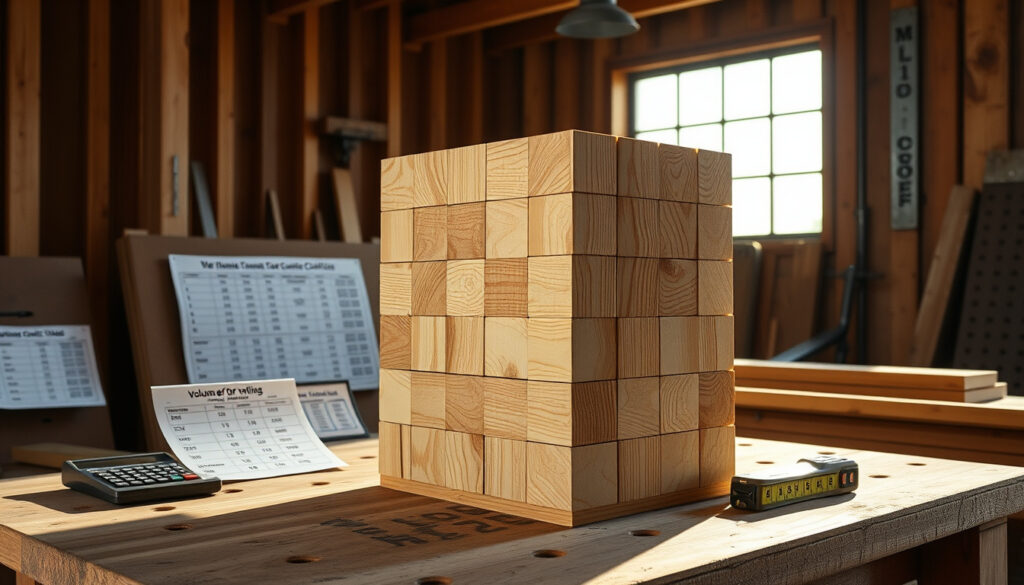
Cubic Feet to Cubic Yards – Formula, Chart and Calculator
Converting between cubic feet and cubic yards is a fundamental skill for anyone working in construction, landscaping, or home improvement projects. Whether you’re ordering concrete for a foundation, calculating soil volume for a garden bed, or estimating gravel needs for a driveway, understanding this volume conversion ensures you purchase the right amount of material without overspending or falling short.
The relationship between these two units is fixed and unchanging, making the conversion straightforward once you know the basic formula. This guide provides a complete explanation of the conversion process, practical examples, and reference tools to help you calculate volumes accurately for any project.
How Many Cubic Feet Are in a Cubic Yard?
One cubic yard contains exactly 27 cubic feet. This relationship is derived from the linear measurement where 1 yard equals 3 feet. When both sides of this equation are cubed, the result is (3 ft)³ = 27 ft³ per yd³. This conversion factor remains constant regardless of the material being measured or the context of the calculation.
Key Insights
- The factor of 27 comes from 3 × 3 × 3, reflecting the three-dimensional nature of volume measurement
- Bulk materials like concrete, topsoil, mulch, and gravel are typically sold by the cubic yard
- On-site measurements are often taken in feet, requiring conversion before ordering materials
- Rounding to two decimal places works well for most practical applications
- The conversion is exact and carries no variation between different contexts or materials
- This standard aligns with U.S. customary units maintained by the National Institute of Standards and Technology
Conversion Factor Explained
Understanding why the conversion factor is 27 requires examining the relationship between linear feet and yards. Since 1 yard measures exactly 3 feet, and volume calculations involve three dimensions, the conversion factor becomes 3³ = 27. This means a space measuring 1 yard in length, width, and height contains 27 one-foot cubes.
| Cubic Feet (ft³) | Cubic Yards (yd³) |
|---|---|
| 1 | 0.037 |
| 2 | 0.074 |
| 3 | 0.111 |
| 5 | 0.185 |
| 10 | 0.370 |
| 27 | 1 |
| 54 | 2 |
| 81 | 3 |
| 135 | 5 |
| 270 | 10 |
How Do You Convert Cubic Feet to Cubic Yards?
The conversion process involves dividing the number of cubic feet by 27. This simple division operation transforms feet³ into yards³ with precision. Alternatively, you can multiply the cubic foot value by 0.037037, which represents the reciprocal of 27 and yields the same result.
Step-by-Step Formula
To convert cubic feet to cubic yards, follow these steps. First, determine the total volume in cubic feet by measuring the length, width, and height in feet and multiplying these three dimensions together. Second, divide that result by 27 to obtain the volume in cubic yards.
For example, converting 54 cubic feet to cubic yards requires dividing 54 by 27, which equals 2 cubic yards. For smaller volumes, the same principle applies: 5 cubic feet divided by 27 equals approximately 0.185 cubic yards. Larger volumes follow the same calculation, such as 150 cubic feet yielding approximately 5.556 cubic yards.
When working without a calculator, multiply cubic feet by 0.037037 for a quick estimate. This works because 1/27 ≈ 0.037037, and the multiplication approach often proves easier for mental math in the field.
Common Mistakes to Avoid
- Confusing linear feet with cubic feet when gathering measurements
- Forgetting to cube all three dimensions before dividing by 27
- Using the wrong conversion direction (multiply instead of divide, or vice versa)
- Rounding too aggressively, leading to material shortfalls
- Neglecting to account for compaction, which reduces usable volume for soils and gravels
- Assuming the conversion varies by material type when it remains constant
Always measure in feet before converting. If your measurements are in inches or mixed units, convert everything to feet first. A volume of 10 feet × 5 feet × 2 feet yields 100 ft³, which then divides by 27 to give approximately 3.7 yd³.
Cubic Feet to Cubic Yards Calculator and Chart
Online calculators provide instant conversions by accepting cubic feet as input and delivering cubic yards as output. These tools eliminate manual calculation errors and are particularly useful when working with irregular volumes or when multiple conversions are needed for a project.
Quick Reference Table
The following table presents common conversions for quick reference during project planning or material ordering. Values are rounded to three decimal places for practical use in construction and landscaping applications.
| Cubic Feet | Cubic Yards |
|---|---|
| 100 | 3.704 |
| 200 | 7.407 |
| 300 | 11.111 |
| 400 | 14.815 |
| 500 | 18.519 |
| 600 | 22.222 |
| 750 | 27.778 |
| 1,000 | 37.037 |
To reverse the conversion from cubic yards to cubic feet, simply multiply by 27. This reverse calculation is useful when you know the cubic yardage required by supplier specifications but need to visualize the volume in feet for site planning.
Cubic Feet to Cubic Yards in Construction and Landscaping
Construction professionals and landscapers rely on this conversion daily when ordering materials. Concrete contractors purchase ready-mix concrete by the cubic yard, yet project specifications often describe dimensions in feet. Similarly, landscape suppliers sell mulch, topsoil, and gravel by the cubic yard, while project plans list garden bed dimensions in feet.
Real-World Examples
Consider a concrete footing measuring 10 feet long, 2 feet wide, and 1 foot deep. The volume equals 20 cubic feet, which converts to approximately 0.741 cubic yards. A contractor would order slightly more than this to account for waste and settling.
For a garden bed measuring 15 feet by 10 feet with a depth of 6 inches (0.5 feet), the volume calculation yields 75 cubic feet. Dividing by 27 gives approximately 2.78 cubic yards of topsoil needed to fill the bed to the desired depth.
A driveway project requiring gravel 20 feet long, 10 feet wide, and 4 inches deep (0.333 feet) involves 66.6 cubic feet of material. This converts to roughly 2.47 cubic yards of gravel.
Material Volume Tips
- Always add 5-10% extra to your calculated volume to account for compaction and settling
- Soil and gravel typically compact 10-20%, increasing the required volume from loose measurements
- Concrete does not compress but may be wasted during pouring, so adding 5% is standard practice
- Mulch settles significantly over time; ordering 10% more than calculated helps maintain desired depth
- Irregularly shaped areas can be estimated by breaking them into rectangular sections and summing the volumes
- When in doubt, consult with your material supplier about recommended overage percentages
Material suppliers typically round up to the nearest quarter or half cubic yard. Ordering 3.7 cubic yards means you’ll receive 3.75 cubic yards of material. Plan your budget accordingly and verify delivery quantities upon arrival.
Understanding the Conversion Factor
The conversion between cubic feet and cubic yards represents one of the most reliable constants in construction mathematics. Unlike estimates or approximations, this relationship never varies because it derives from the legal definition of a yard as exactly 3 feet.
- 1 cubic yard = 27 cubic feet, exactly
- The formula yd³ = ft³ ÷ 27 works universally
- No variation exists between material types or contexts
- The conversion aligns with U.S. customary standards
- This is a definitional relationship, not a measured one
- All sources confirm the 27:1 ratio consistently
- The conversion applies identically in every application
- No rounding is required for mathematical accuracy
When and Why Convert Cubic Feet to Cubic Yards
Understanding when to perform this conversion prevents purchasing errors that can derail projects financially and logistically. Most construction materials are priced and sold by the cubic yard in the United States, making this conversion essential for accurate cost estimation.
DIY homeowners benefit equally from mastering this conversion. Garden projects, shed foundations, paver installations, and fire pit construction all require material volume calculations that demand conversion from foot-based measurements to yard-based orders.
Professionals who regularly handle material estimates develop intuitive familiarity with the 27-factor, often performing conversions mentally for common project sizes. This fluency saves time during site visits and improves communication with suppliers and clients alike.
Summary
Converting cubic feet to cubic yards requires dividing by 27, with the alternative being multiplying by 0.037037. This relationship holds constant because one yard equals exactly three feet, and cubing this linear relationship produces the volumetric conversion factor. The formula applies uniformly across all materials and applications, from concrete ordering to soil delivery.
For those comparing currency exchange rates or tracking precious metal pricing, similar conversion principles apply—understanding the base unit and the multiplier creates accurate results every time.
Sources and References
National Institute of Standards and Technology (NIST)
The U.S. customary system defines 1 yard as exactly 3 feet, establishing the foundation for all volumetric conversions between these units.
Multiple educational platforms and conversion calculators confirm the 27:1 ratio, including Vedantu, Inch Calculator, Unit Converters, and Calculator Soup. These sources align on the mathematical relationship with no variation reported across different contexts.
Frequently Asked Questions
What is the difference between cubic feet and cubic yards?
Cubic feet and cubic yards both measure three-dimensional volume, but cubic yards represent a larger unit. One cubic yard equals 27 cubic feet. Materials are commonly sold by the cubic yard in construction and landscaping contexts.
How many cubic yards is 100 cubic feet?
Dividing 100 by 27 gives approximately 3.704 cubic yards. Rounding to practical ordering quantities typically means purchasing 3.75 cubic yards.
Why is the conversion factor 27?
The factor 27 results from cubing the linear relationship where 1 yard = 3 feet. Calculating (3 ft)³ = 27 ft³ establishes the volumetric conversion factor.
How do I convert cubic yards back to cubic feet?
Multiply cubic yards by 27 to obtain cubic feet. This reverse operation proves useful when planning spaces or verifying material volumes expressed in different units.
Can I use this conversion for concrete calculations?
Yes, this conversion applies directly to concrete. Foundation dimensions measured in feet convert to cubic yards for ready-mix ordering. Always add approximately 5% extra for waste and settling.
Does the conversion change for different materials?
No, the mathematical conversion remains constant. However, ordering practices may vary because some materials compact more than others, affecting how much you should order beyond the calculated volume.
More related posts
 Signs of a Stroke: The 5 Warnings & FAST Test Guide
 2026 Winter Olympics Medals: Predictions, Table & France Chances
 Dart Board Buying Guide: Best Dart Boards in Ireland
 Kim Porter: Her Life, Death, and Relationship with Diddy
 Pakistani Nihari Near Me: Find Authentic Local Nihari
 Lexus IS 350 F Sport: Specs, Performance, Price & Review
 Shayne Topp: Smosh Career, Wife, and Drowning Myth
 Winnie Harlow: Vitiligo, Career, and Relationship Facts
