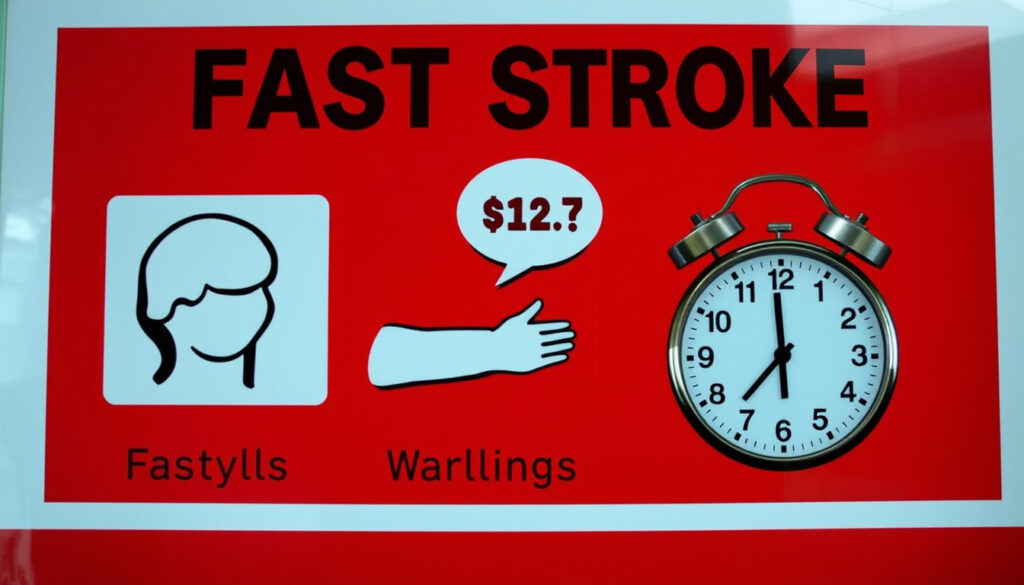
Signs of a Stroke: The 5 Warnings & FAST Test Guide
Most people know to look for sudden face drooping or slurred speech when a stroke hits—but the warning signs can show up days or even weeks earlier, and some strokes happen without any obvious symptoms at all. Learning to spot the full range of signals, from the FAST checklist to the quieter red flags, could be the difference between recovery and lasting damage. Here’s what the latest clinical guidance and research say about catching a stroke before it strikes.
FAST Test Signs: Face, Arms, Speech, Time · Sudden Symptoms: Vision loss, dizziness, severe headache · Mini-Stroke Relation: TIA precursor to full stroke · Silent Strokes: No obvious symptoms, detected via imaging
Quick snapshot
- FAST identifies face, arm, speech deficits with immediate emergency call (Stroke Association UK)
- BE FAST study tracked 433 patients over 2020–2023 (PMC/NIH)
- TIA resolves in 5–10 minutes typically, up to 24 hours max (GoodRx)
- Whether specific symptoms reliably appear 7 days or 1 month before a stroke (varies by individual)
- Exact long-term outcomes for silent stroke carriers not fully mapped
- BE FAST retrospective study ran January 2020 through December 2023 (PMC/NIH)
- Standard FAST misses an estimated 14% of strokes (University Health)
- TIA patients face roughly a 1-in-3 chance of full stroke within months (Dr. Gurneet Sawhney)
- BE FAST gaining traction in EMS and emergency department triage (PMC/NIH)
| Label | Value |
|---|---|
| FAST Acronym | Face-Arms-Speech-Time |
| Top Sites | CDC, NHS, stroke.org |
| Emergency Rule | Call 911 immediately |
| Silent Stroke Risk | Leads to major events |
| TIA Typical Duration | 5–10 minutes |
| TIA Maximum Duration | 24 hours |
| FAST Miss Rate | 14% |
| TIA-to-Stroke Risk | 1 in 3 within months |
What are the 5 warning signs of a stroke?
The FAST acronym is the most widely used tool for recognizing a stroke in progress. It breaks down into four core checks: Face weakness, Arm weakness, Speech problems, and Time to act. The CDC and American Heart Association both recommend treating any single FAST sign as a medical emergency requiring an immediate call to 911.
A 2024 retrospective cohort study tracked 433 acute stroke patients over three years and found that hospitals using BE FAST (the expanded version adding Balance and Eyes) achieved better triage outcomes than those relying on the standard FAST checklist alone.
FAST test breakdown
The face check asks the person to smile. Drooping on one side of the mouth or around an eye is a red flag. For arm weakness, the tester asks the person to raise both arms and hold them in place—a drift or downward sag on one side points to possible stroke. The speech test asks the person to repeat a simple phrase. Northwestern Medicine recommends using “You can’t teach an old dog new tricks,” while Duke Health suggests “The sky is blue” for the same purpose.
Any one of these signs means calling emergency services right away. The Stroke Association UK guidance states that waiting to see if symptoms resolve on their own is dangerous and delays treatment that could limit brain damage.
Standard FAST misses roughly 14% of strokes, according to University of Kentucky research cited by University Health. Adding Balance and Eyes to the check reduces the gap.
Sudden onset indicators
Beyond the core FAST signs, the American Stroke Association lists additional sudden-onset symptoms: blurred or double vision, difficulty walking or maintaining balance, severe headache with no known cause, and sudden confusion or trouble understanding speech. These often accompany FAST signs but can also appear on their own, particularly in women.
BE FAST expands the original acronym specifically to capture these additional indicators earlier. VA Health guidance notes that balance loss means sudden unsteadiness or a fall with no other explanation, while eyes-related symptoms include sudden blurred vision, double vision, or loss of sight in one or both eyes.
What are the four silent signs of a stroke?
A silent stroke produces no obvious outward symptoms. The person may never know it happened unless brain imaging reveals the damage during unrelated medical imaging. URMC Rochester explains that silent strokes are detected incidentally through MRI or CT scans ordered for other reasons, making them a hidden risk factor for future major strokes.
Subtle neurological changes
Silent strokes often leave faint traces: a slight decrease in coordination, small lapses in memory or concentration, or a mild balance issue that patients dismiss as normal aging. Because these symptoms are easy to rationalize away, the actual stroke goes unrecognized and untreated.
Research suggests silent strokes increase the risk of subsequent full strokes. The mechanism is straightforward—damage to small blood vessels in the brain signals underlying vascular disease, and without intervention, more events follow.
Detection methods
Brain MRI is the primary tool for detecting silent strokes. A radiologist reading the scan looks for small areas of white matter damage or infarction. Patients who have experienced silent strokes often learn about them during evaluations for memory concerns, dizziness, or other neurological complaints.
For anyone with vascular risk factors—hypertension, diabetes, high cholesterol, smoking history—requesting brain imaging for persistent cognitive or balance symptoms may be warranted. Early detection allows doctors to intensify prevention strategies before a symptomatic stroke occurs.
What are 5 signs of a mini-stroke?
A mini-stroke, medically known as a transient ischemic attack (TIA), produces the same symptoms as a full stroke but resolves within minutes to hours. The American Stroke Association emphasizes that a TIA requires the same urgent response as a major stroke—waiting to see if symptoms disappear is a gamble that often loses.
TIA symptoms overlap
Mini-stroke warnings closely mirror full stroke symptoms. Vision problems appear in one or both eyes. Difficulty speaking or forming coherent sentences emerges suddenly. Face or limb weakness affects one side of the body. Loss of balance or coordination occurs without explanation. Sudden confusion makes it hard to follow conversations or complete familiar tasks.
According to GoodRx, TIA symptoms typically resolve within 5–10 minutes, though they can persist up to the 24-hour mark. Any symptom lasting more than a few minutes warrants emergency evaluation, even if it fades before arrival at the hospital.
Duration under 24 hours
The key distinction between TIA and full stroke is permanence. During a TIA, a temporary clot blocks blood flow briefly, causing symptoms that vanish once circulation restores. A full stroke involves cell death that produces lasting damage.
The urgency is real: Dr. Gurneet Singh Sawhney, a neurosurgeon, notes that a TIA signals a brain under distress. “A TIA is not a harmless episode. It is a critical warning that has to be taken seriously.” Roughly 1 in 3 patients who experience a TIA go on to suffer a full stroke within months, often without intervention.
TIAs are medical emergencies despite the temporary nature of symptoms. Calling 911, noting the time symptoms started, and avoiding driving yourself to the hospital keeps treatment options open.
How does your body warn you before a stroke?
Some stroke patients recall warning signs in the days or weeks leading up to the event. These pre-stroke signals are less dramatic than the acute FAST symptoms but may include unusual fatigue, mild vision disturbances, transient coordination issues, or unexplained headaches. Northwestern Medicine advises paying attention to these subtler shifts, especially in people with existing vascular risk factors.
Pre-stroke signals
Reported pre-stroke warnings vary between individuals. Some patients describe a sudden wave of tiredness days before the event. Others notice slight balance changes while walking or a mild blurring in peripheral vision that comes and goes. Headaches that are out of character—particularly in people who rarely get them—also appear in some patient accounts.
These signals are not reliably predictive on their own. Healthcare providers stress that most people with fatigue or mild headaches do not go on to have strokes. However, when these symptoms cluster together or appear suddenly in someone with risk factors, they deserve medical attention.
Days or weeks prior
The research literature does not establish a consistent timeline for pre-stroke warnings across all patients. Some reports suggest warning signs emerge roughly a week before a major event, while others describe earlier shifts. The variability makes general guidance difficult, but the principle is clear: sudden or unexplained changes in how you feel warrant a conversation with a doctor, particularly if you have hypertension, diabetes, atrial fibrillation, or a smoking history.
How to check stroke at home?
The FAST test is designed for use by anyone—no medical training required. Working through each check takes under a minute and can be done while waiting on the phone with emergency services. The goal is not diagnosis but recognition: identifying stroke indicators fast enough to get the person to treatment within the critical window.
FAST self-test steps
- Face: Ask the person to smile. Watch for one side of the mouth or eye drooping.
- Arms: Ask the person to raise both arms and hold them steady. One arm drifting downward is a positive sign.
- Speech: Ask the person to repeat a simple sentence. Slurred speech, wrong words, or inability to speak clearly counts as positive.
- Time: If any single check is positive, call 911 immediately. Do not wait to see if symptoms ease.
Duke Health recommends adding a balance check to the standard three: note sudden unsteadiness, loss of coordination, or a fall with no other cause. VA Health guidance includes leg weakness as part of the arm-raise test, since leg drift often accompanies arm drift in stroke patients.
When to call 911
The American Heart Association is direct: “F.A.S.T. is an easy way to remember the sudden signs of a stroke.” Any one FAST sign calls for emergency services. Driving yourself or someone else to the hospital delays treatment because paramedics can begin assessment and notify the receiving facility en route.
Note the time symptoms first appeared. This detail is critical for treatment decisions in the emergency department. Even if symptoms fade before the ambulance arrives, the person still needs evaluation to determine the cause and reduce future stroke risk.
Clear picture vs. what is still unclear
Confirmed
- FAST signs from CDC, NHS, American Stroke Association
- TIA as a precursor to full stroke
- Silent strokes detected only via imaging
- BE FAST improves early identification vs. standard FAST
- TIA resolves within 5–10 minutes typically, up to 24 hours
- 1-in-3 TIA patients suffer full stroke within months
Unclear
- Exact symptom patterns 7 days or 1 month before stroke (varies by individual)
- Whether pre-stroke warnings reliably appear in all patients
- Long-term outcomes data for silent stroke carriers
- Why some patients experience clear pre-warnings and others do not
Dr. Gurneet Singh Sawhney, Neurosurgeon, Mumbai
“Even if the symptoms disappear quickly, the brain has already signaled distress. A TIA is not a harmless episode. It is a critical warning that has to be taken seriously.”
American Heart Association, Health Organization
“F.A.S.T. is an easy way to remember the sudden signs of a stroke.”
For anyone with stroke risk factors—hypertension, diabetes, high cholesterol, smoking, atrial fibrillation, or age over 55—the path forward is clear: memorize FAST, take any warning sign seriously, and call for help immediately. A few minutes of delay can mean the difference between clearing a clot with medication and irreversible brain damage. The American Stroke Association puts it plainly: becoming a “stroke hero” means learning F.A.S.T. to help save lives—not just your own.
Related reading: early detection of symptoms
stroke.org.uk, pmc.ncbi.nlm.nih.gov, drgurneetsawhney.com, va.gov, urmc.rochester.edu, reliantemergencyroom.com, nm.org, universityhealth.com, goodrx.com, stroke.org, dukehealth.org, heart.org
Health authorities worldwide promote recognizing five warning signs and FAST test to ensure rapid response during a potential stroke emergency.
Frequently asked questions
What is the 4-hour rule for stroke?
The so-called “window” for clot-busting treatment (thrombolysis) is typically within 4.5 hours of symptom onset for most patients, though the window varies based on stroke type, patient age, and imaging results. Calling 911 immediately rather than waiting at home preserves all available treatment options.
What is a pre-stroke?
A “pre-stroke” is not a formal medical term but refers to warning signs or conditions that may precede a major stroke. TIA events are the most clearly documented pre-stroke signals. Some patients also report unusual fatigue, mild vision changes, or coordination issues days or weeks before a full stroke.
What causes a stroke?
The two main types are ischemic (caused by a blood clot blocking an artery to the brain) and hemorrhagic (caused by a blood vessel rupturing). Risk factors include hypertension, diabetes, high cholesterol, smoking, obesity, physical inactivity, atrial fibrillation, and age over 55.
What are 80% of strokes caused by?
Ischemic strokes account for roughly 80–85% of all strokes. They occur when a clot blocks blood flow to brain tissue. Hemorrhagic strokes account for the remaining 15–20% and involve bleeding into or around the brain.
What is the biggest indicator of a stroke?
Sudden onset of any FAST sign—face drooping, arm weakness, or slurred speech—is the most reliable indicator. The CDC emphasizes treating any single FAST symptom as a medical emergency requiring immediate 911 contact.
What are early signs of stroke in women?
Women may experience additional or atypical stroke symptoms more often than men, including sudden nausea, general weakness, difficulty breathing, sudden pain, general confusion, or fainting. These often accompany the standard FAST signs but can also appear on their own.
What are unusual stroke symptoms?
Beyond the core FAST signs, sudden severe headache with no known cause, unexplained dizziness or loss of balance, sudden nausea, vision changes in one or both eyes, and sudden confusion fall under “unusual” but recognized stroke symptoms.
What is treatment for stroke?
Ischemic stroke treatment may include clot-busting medication (tPA) within the treatment window, clot retrieval procedures, blood thinners, and blood pressure management. Hemorrhagic stroke may require surgery to repair or remove damaged blood vessels. Rehabilitation begins after the acute phase to address speech, motor, and cognitive recovery.
More related posts
 Jack Hughes: Bio, Teeth, Dating Tate McRae, LGBTQ Stance & FAQ
 India vs Pakistan Head-to-Head Stats: ODI, T20, and Test Records
 Canad Inns Polo Park: Amenities, Rooms, Location & Attractions
 Bill Gates: Biography, Net Worth, Philanthropy, and Current Activities
 Hayden Panettiere: Daughter, Custody, and Why She Left Acting
 Canadiens Game Summary: Score, Standings & Price Update
 Cineplex Odeon Ste-Foy Horaire – Showtimes Location Tickets Guide
 The Beast in Me Episodes: List, Summaries & Guide
